Westover Hills at Mid-Century, 1940-1960
By John M. Coski
The two decades following the 1942 annexation of Westover Hills into the City of Richmond saw the establishment of neighborhood institutions that we know today. But first there was a world war to be fought and won – and Westover Hills residents did their part.
Westover Hills at War
Even before American entry into World War II, neighborhood organizations kept abreast of the deteriorating international situation. Meeting at the Caledonia Road home of Mary Crawford in January 1935, the Forest Hill Woman’s Club discussed “The Worldwide Struggle of Peace Against War.” A month after war began in Europe, Newsweek Washington correspondent Ernest K. Lindley spoke to the Westover Hills Women’s Club about American policy. Area women’s clubs planned a January 1942 special symposium on “The Role of Women in National Defense.”
By the time of that symposium, the United States had entered the war and women’s roles in national defense had become quite real. Elizabeth Pettigrew Hundley of New Kent Road was appointed chairman of Richmond Defense Zone 2, precinct 13.
It sounded like the war had come to Westover Hills when, on the evening of November 28, 1942, an air raid siren blared across the neighborhood. Residents had been expecting a practice drill and sprang into action, but the siren was the product of an electrical short circuit.
In October 1942, the women of Westover Hills and Forest Hill opened a Red Cross Work Room (sewing room) at 4804 Forest Hill Avenue in what had been the Westover Bakery & Pastry Shop (adjacent to O’Toole’s today). Under the direction of Virginia Jones Almond, chairman of the Westover Garden Club’s Defense Committee, the work room was open 10 a.m. to 1 p.m. Tuesdays and Thursdays. It became an informal center of war work in the neighborhood. The Garden Club held “an old-fashioned Christmas party” for 50 married soldiers stationed at the Richmond Air Base in December 1943.
Residents also participated in war bond drives. On “Bond and Stamp Day” in November 1942, attendees of a card party sponsored by Westover Hills and Forest Hill Women’s Clubs raised more than $12,000. The next night a “literary bond party” held by business and professional women raised $25,000.
And, of course, neighborhood men entered military service, including (among many others) two brothers named Brothers who lived on Evelyn Byrd Road in River Hill. Lieutenant Earl P. Brothers received the Distinguished Flying Cross for “extraordinary achievement in aerial combat” and Captain Herbert H. Brothers received the same for his service as bomber pilot with the Eighth Air Force. Lieutenant Holmes H. Smith of Sylvan Road won commendation for his leadership in charge of a naval construction detachment in the Pacific.
Among the neighborhood men who made the ultimate sacrifice was Army Air Corps Lieutenant Jay Killian Bowman, son and namesake of a Westover Hills pioneer, who was killed in a bombing raid over Germany in January 1945. (His twin sister, Geline Bowman Williams, later became mayor of Richmond and died in January 2025.)
First Fruits of Annexation: Fire Station and Playground
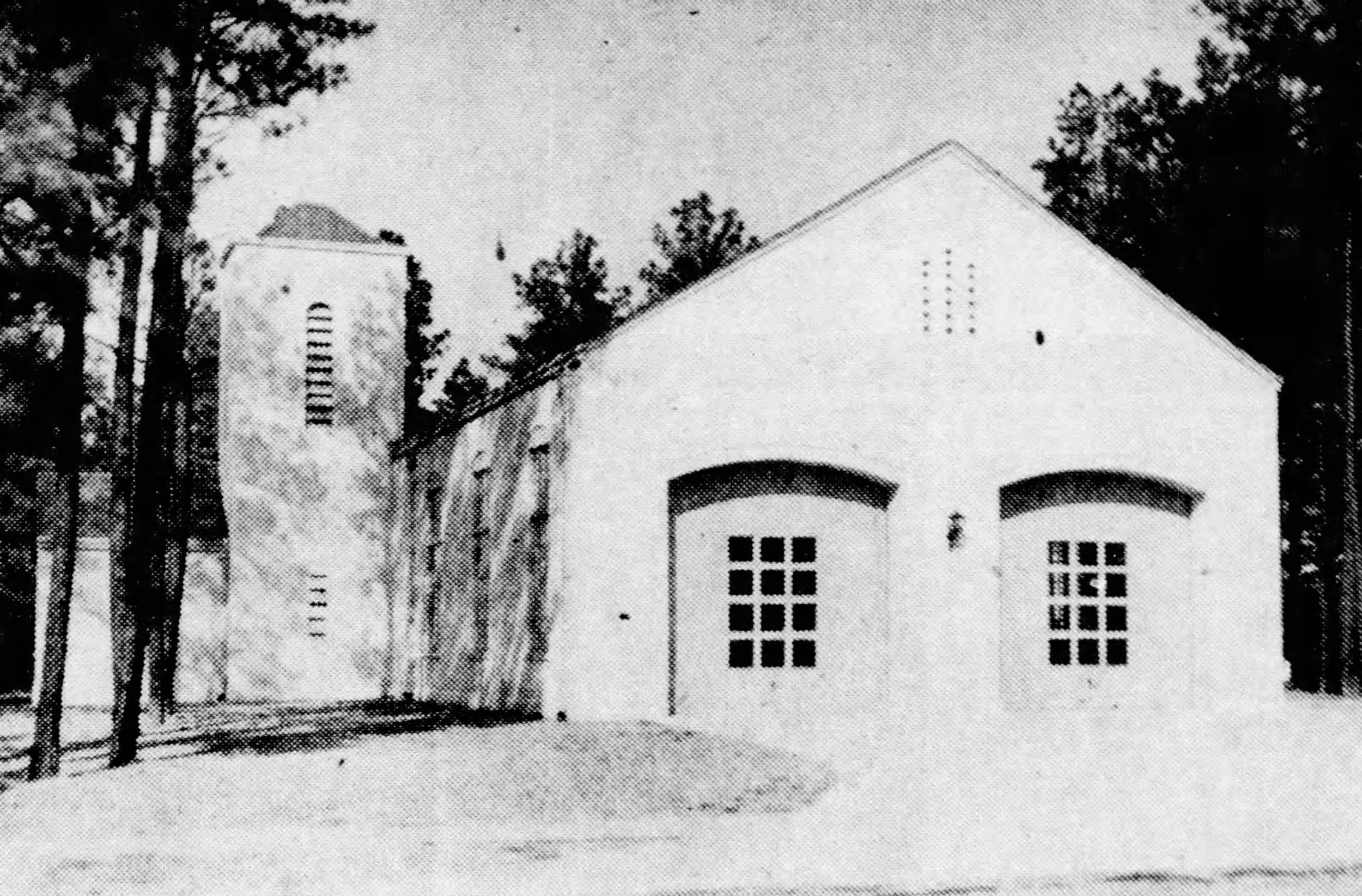
Fire Station #20
Less than a month after American entry into World War II, Richmond annexed Westover Hills from Chesterfield County. Although hampered by wartime shortages, the city began fulfilling its promises to the newly annexed areas. In the summer of 1942, the city acquired land on the north side of Forest Hill Avenue for a fire station, then had to await War Production Board approval to build the engine house. Completed in late 1943, Engine Company No. 20 nevertheless could not open because the Fire Department was short on manpower. Only when the auxiliary firemen of Richmond agreed to provide volunteer firemen did the station open on March 20, 1944.
Months after the conclusion of the war, the city condemned the vast Cox property (bordered by Jahnke Road and Forest Hill Avenue) to within 150 feet of Westover Hills Boulevard “for recreational and other municipal purposes…” Richmond Mayor W. Stirling King formally presented the Westover Playground (sometimes called the Jahnke Road Playground) to Southside citizens on August 20, 1949. Already home to the Westover Hills Community House, the space eventually accommodated a playground, tennis courts, and the Westover Hills Elementary School. (The city recently redesignated the property “Westover Park.”)
Neighborhood Churches
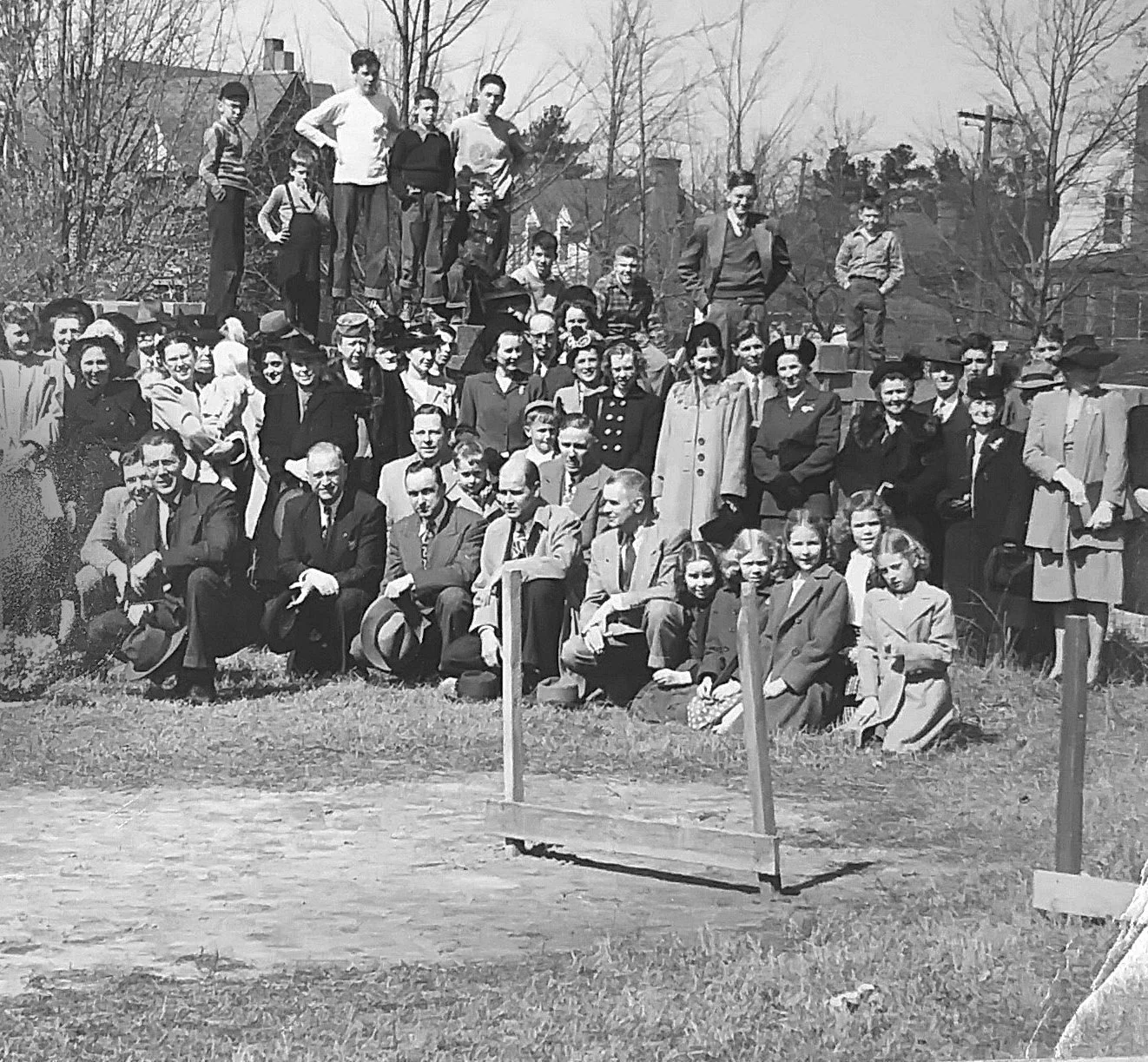
Groundbreaking for the Westover Hills Methodist Church
Unlike Early American townships, 20th-century subdivisions did not set aside lots for civic or religious purposes. If Westover Hills residents were to establish churches, they had to acquire the land themselves. By the end of 1946, area Baptists and Methodists were in the process of organizing new churches.
The Westover Baptist Church was constituted formally in December 1946. Until the completion of its new building at the junction of 49th St. and Belt Boulevard in early 1948, the congregation met variously at Patrick Henry School, the Westover Community House, and the Westover Fire Station.
The Westover Hills Methodist Church acquired several contiguous lots at the northeast corner of South Boulevard and King William Road that evidently had been sold to speculators and not built upon; the owner of at least one of them had defaulted on payment during the Depression and the property put up for trustee sale. The vacant lots served during the 1930s and 1940s as the playing field for the neighborhood sandlot football team.
The Church acquired the property but had to apply formally to have it rezoned. The city rejected the first application because it did not provide enough yard space but finally approved the project in in late 1947 Meanwhile, the congregation, under Reverend M. Johns Gray, began meeting at the Stone House in Forest Hill Park and the Westover Community House in February 1947. Construction of the education building began in early 1948 and it was completed by February 1949. After a years-long fundraising campaign, the church broke ground for a new sanctuary in January1956 and held the first service there on March 24, 1957.
Other Neighborhood Amenities
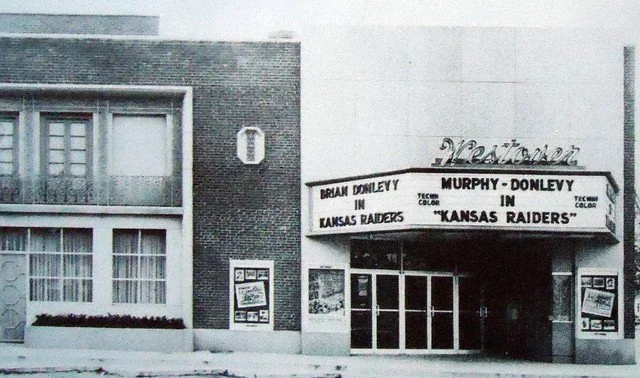
Westover Theatre
November 1949 brought another amenity to the neighborhood. The U.S. Post Office opened the Forest Hill Post Office at 1212 Westover Hills Boulevard, replacing the postal substation that had been located in the Westover Pharmacy since 1930.
At the same time, Neighborhood Theaters, Inc., announced plans to open a new movie theater at 4712 Forest Hill Avenue. It would be the first theater in the area to provide wheelchair access for patrons. (The Westover Theatre closed in 1995, and the building became the new home for New Canaan Baptist Church in 1998.)
Westover Hills Elementary School
The 1953-1954 city capital budget included money for a new primary school to be built on the Jahnke Road Playground. Aided by $382,000 in state funds, Westover Hills School opened in September1955. Consisting originally of eight classrooms, an office, health facilities, and a multipurpose room, the school accommodated students from “junior primary” through fourth grade and was an “annex” to the Patrick Henry School. In 1960, a major expansion added 14 classrooms, a “gymtorium,” enlarged cafeteria and kitchen, and teachers’ lounge, allowing the school to serve 675 students through 7th grade and become independent of Patrick Henry.
Consistent with Virginia’s racially segregated school system, the Westover Hills School was for white students only. Although it opened a year after the U.S. Supreme Court’s Brown v. Board of Education decision ostensibly ended school segregation, Westover Hills remained a segregated, whites-only school until the 1968-1969 term – after another Supreme Court decision, Green v. New Kent County, compelled Virginia and other states to end their defiance of Brown.
Westover Hills Branch Library
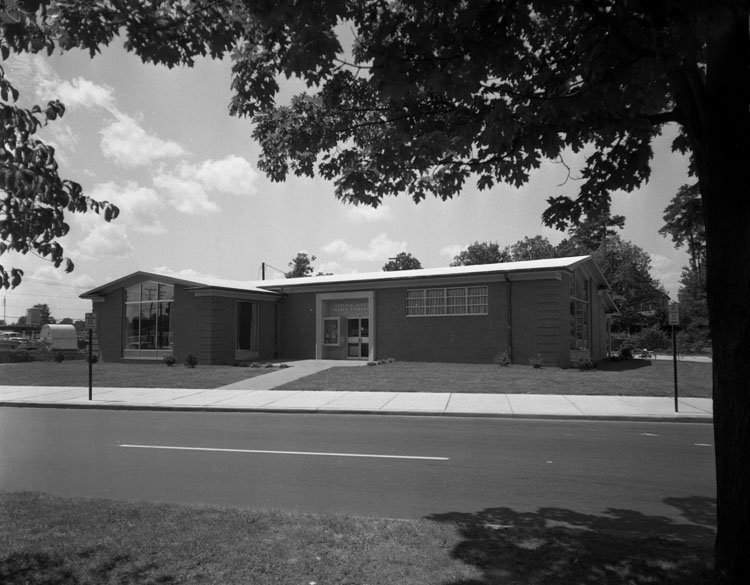
Westover Hills Library in the 1950s
In contrast, the Richmond Public Library system was integrated in 1947, twelve years before the opening of the Westover Hills Branch Library.
Lying on the city’s western edge and boasting a quickly growing population, Westover Hills was a natural location for a branch library. In February 1957, the city Planning Commission considered a location in the new Westover Hills Shopping Center. Instead of acquiring a parcel in the shopping center itself, the Commission accepted an offer of the lot at the southwest corner of Devonshire and Westover Hills Boulevard from its owners, Dr. and Mrs. W. Henry Copley. The city agreed to rezone the land and to appropriate money for its purchase.
The plans then hit several obstacles. The original Westover Hills Corporation deed forbade the erection of buildings other than residences or dwellings – a restrictive covenant that would not expire until January 1, 1964. Councilman Robert J. Heberle – a Westover Hills resident – opposed the library because it would violate a covenant and because he thought the city should spend funds on two new high schools. And, he argued, Westover Hills and Forest Hill residents had access to a smaller library located in the Stone House at Forest Hill Park.
Heberle’s neighbors begged to differ. More than 550 residents signed a petition favoring the library despite the violation of the covenant. Confident that no one would challenge the legality of their decision, City Council overruled Heberle, purchased the lot for $8,500, and appropriated funds for the building.
Approximately 500 people attended the dedication on July 9, 1959. The new library boasted a 10-car parking lot and a drive-in window for easy check-out and return. Maxine W. Rogers, a Richmond Public Library reference librarian who lived at W. 47th St., was named branch librarian and oversaw the transfer of the
collection from the Stone House. She remained in the job until her retirement in 1983.
By 1960, Westover Hills was a maturing urban neighborhood with appropriate institutions and amenities – and an expanding commercial district that will be the subject of the next installment. n